


Corte central Prime Chateaubriand
American steakhouse quality, selected for marbling, tenderness, and flavor.
CUALIDADES DESCRIPTIVAS: Un Chateaubriand, también conocido como filet mignon asado, lomo asado o lomo de res, es un delicioso corte de carne que es perfecto para las fiestas o cualquier ocasión especial. Un Chateaubriand tradicional es uno de los cortes de carne más tiernos y, a menudo, el corte de carne más caro que se puede encontrar en el mercado.
DETRÁS DEL PRODUCTO: El secreto de la ternura del Chateaubriand está en su ubicación en el animal. Chateaubriand es un lomo asado extremadamente húmedo que consta de Filet Mignon y el lomo subprimal más grande. Este tierno asado no forma parte de ningún músculo que soporte carga, lo que hace que todo el corte sea extremadamente jugoso y tierno.
La palabra Chateaubriand proviene de Francia y se refiere aproximadamente a un "lomo de ternera grueso". Se dice que Chateaubriand lleva el nombre del famoso escritor del siglo XIX, Francois-René de Chateaubriand, quien era un ávido amante de este corte de carne en particular.
SUGERENCIAS PARA SERVIR: Este asado Chateaubriand se cocina mejor poco cocido o medio cocido. Dorar el asado en una sartén grande con aceite hasta que esté ligeramente dorado. Coloque el asado en una fuente para hornear y cocine hasta que la temperatura interna sea de 125ºF a 130ºF. Deje reposar de 15 a 20 minutos antes de servir para obtener la experiencia recomendada.
Características clave
CANTIDAD: 2 lb de asado Chateaubriand
PAÍS DE ORIGEN: EE.UU.
ALMACENAMIENTO: Crudo. Debe cocinarse antes de comer. Mantener congelado. Descongelar en refrigeración durante 24 a 48 horas antes de cocinar.
INGREDIENTES: Carne de res
DETRÁS DEL PRODUCTO: El secreto de la ternura del Chateaubriand está en su ubicación en el animal. Chateaubriand es un lomo asado extremadamente húmedo que consta de Filet Mignon y el lomo subprimal más grande. Este tierno asado no forma parte de ningún músculo que soporte carga, lo que hace que todo el corte sea extremadamente jugoso y tierno.
La palabra Chateaubriand proviene de Francia y se refiere aproximadamente a un "lomo de ternera grueso". Se dice que Chateaubriand lleva el nombre del famoso escritor del siglo XIX, Francois-René de Chateaubriand, quien era un ávido amante de este corte de carne en particular.
SUGERENCIAS PARA SERVIR: Este asado Chateaubriand se cocina mejor poco cocido o medio cocido. Dorar el asado en una sartén grande con aceite hasta que esté ligeramente dorado. Coloque el asado en una fuente para hornear y cocine hasta que la temperatura interna sea de 125ºF a 130ºF. Deje reposar de 15 a 20 minutos antes de servir para obtener la experiencia recomendada.
Pat dry, season with salt, and cook according to the specific cut. Use high heat to build a crust, finish gently as needed, and rest before slicing.
CANTIDAD: 2 lb de asado Chateaubriand
PAÍS DE ORIGEN: EE.UU.
ALMACENAMIENTO: Crudo. Debe cocinarse antes de comer. Mantener congelado. Descongelar en refrigeración durante 24 a 48 horas antes de cocinar.
INGREDIENTES: Carne de res
Every order ships in insulated, temperature-controlled packaging. Refrigerate promptly and follow the storage instructions included with your order.
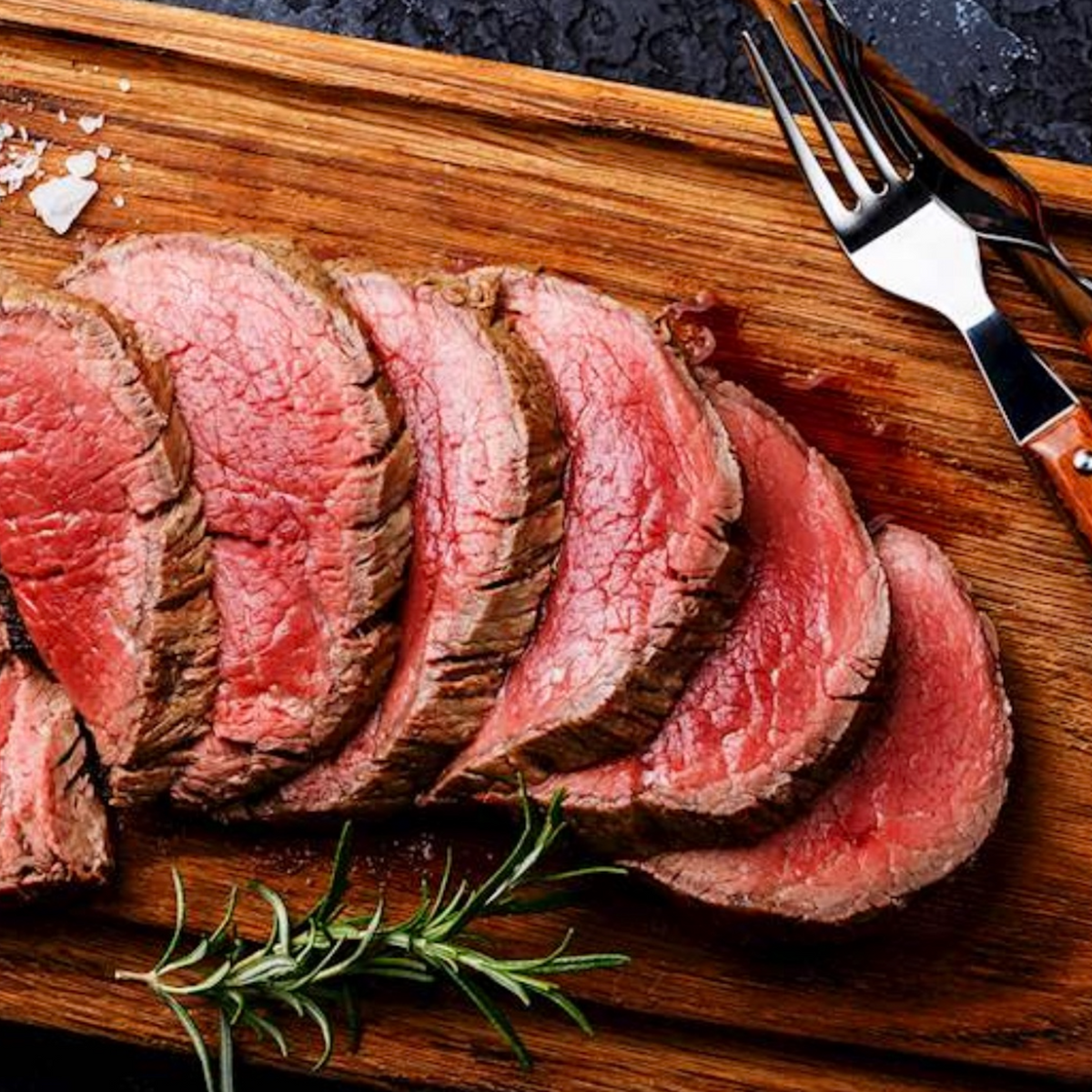
The celebration cut of the tenderloin
Chateaubriand is cut from the thick center of the tenderloin. Its defining quality is uniform tenderness rather than heavy marbling.
What makes USDA Prime exceptional
The USDA grade establishes a high quality standard, while the cut, aging method, and preparation determine the final eating experience.

USDA Prime
The USDA’s highest beef quality grade, awarded for abundant marbling and maturity associated with tenderness, juiciness, and flavor.

Every cut is different
Filet emphasizes tenderness, New York strip emphasizes beef flavor, ribeye emphasizes marbling, and porterhouse combines strip and filet.

Aging, when specified
Dry-aged products develop concentrated flavor and tenderness. The product-specific metafields identify that character without implying every Prime cut is dry-aged.


Respect the cut
Prime filet, strip, ribeye, porterhouse, and roasts each reward a slightly different approach.
Dry & season
Pat the steak dry and season simply so the specific cut remains the focus.
Sear
Use high heat to build a deep crust, then finish according to the cut and thickness.
Rest & slice
Rest before slicing so juices settle. Slice against the grain where appropriate.
Steakhouse quality, chosen by the cut
A precise grade plus product-specific selection makes it easier to choose the right steak for your table.
The grade
USDA Prime sets a high benchmark for marbling and eating quality.
The selection
Each product profile explains the cut’s own balance of flavor, tenderness, and richness.
The versatility
Choose filet for tenderness, strip for beef flavor, ribeye for richness, or porterhouse for two textures in one steak.
If I don't personally love it, I won't sell it. And I'm picky.
What customers say
Verified reviews for this USDA Prime cut.
USDA Prime steakhouse cuts, delivered cold.
Product-specific profiles for marbling, tenderness, flavor, and preparation.